Myofascial Release in Harrisonburg, VA
What is the fascial system, and why does it matter?
To understand why JFB Myofascial Release works differently from standard massage, you first need to understand what fascia is and what happens when it restricts.
Fascia is the three-dimensional web of connective tissue that surrounds, supports, and connects every structure in your body: muscles, bones, organs, nerves, and blood vessels. It is continuous throughout the body, running from the top of your skull to the soles of your feet without interruption. In a healthy state, fascia is fluid, pliable, and largely invisible to the symptoms of daily life.
When the fascia is healthy, the body moves freely and pain-free. When it restricts, everything changes.
Fascial restriction develops gradually in response to injury, surgery, chronic stress, repetitive movement patterns, poor posture, inflammation, and the accumulated physical strain of living in a body over decades. As fascia tightens, it applies compressive forces to every structure it surrounds. Muscles cannot lengthen fully. Joints are held in slightly off positions. Nerves experience pressure. Blood and lymphatic flow are compromised. Pain develops, often in locations that seem unrelated to the original site of restriction.
Here is the critical point: fascial restriction does not appear on X-ray, MRI, or standard imaging. It cannot be detected by standard physical assessment. It is rarely addressed by conventional physical therapy or standard massage. And it does not resolve on its own.
This is why so many people with chronic pain feel like they have tried everything and nothing has worked. They may have addressed the muscle. They may have addressed the joint. They have not addressed the fascia.
What makes JFB Myofascial Release different from standard massage?
John F. Barnes Myofascial Release is a specific therapeutic system developed by physical therapist John F. Barnes over more than 50 years of clinical practice and research. It is not a modality that most massage therapists learn in their initial training. It is an advanced specialty requiring dedicated post-graduate study, hands-on training intensives, and ongoing continuing education.
The core difference between JFB Myofascial Release and standard massage is what each approach targets and how.
Standard massage works primarily with muscle tissue, using rhythmic strokes, kneading, and compression to release tension at the muscular level. This produces real and meaningful results for many clients. But muscle work alone does not reach the fascial system, which lies in a different layer and responds to a fundamentally different type of input.
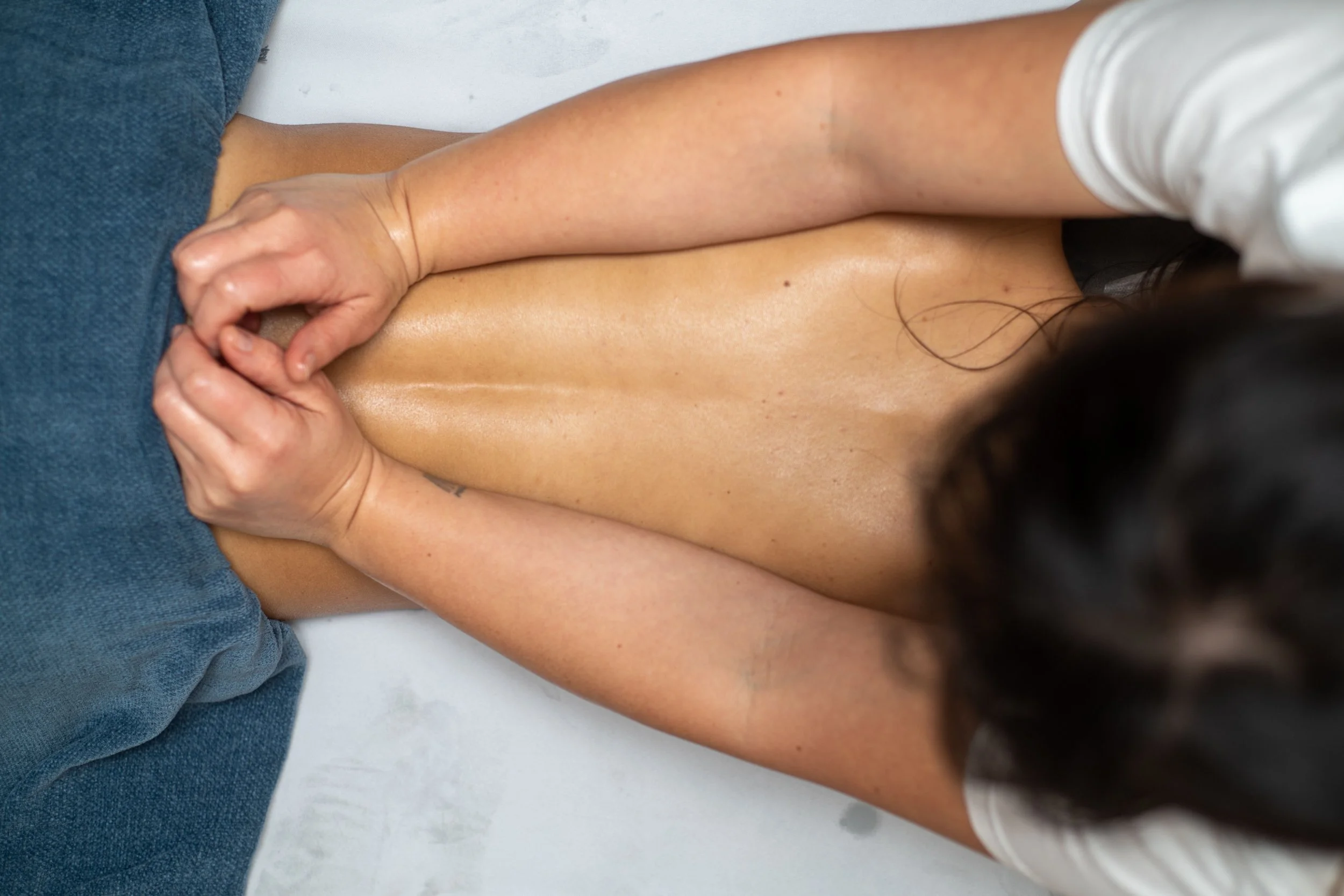
JFB Myofascial Release applies sustained, low-load pressure directly to areas of fascial restriction, held for a minimum of 3-5 minutes, allowing the tissue time to respond and begin to release. The pressure is often lighter than clients expect. The duration is longer. The result is access to a layer of tissue that standard massage does not reach.
This is the difference between working around a restriction and working through it.
The barrier that other treatments have not been able to cross may be fascial.
Fascia does not appear on imaging. It is not addressed by standard massage. It cannot be diagnosed with conventional assessment tools. But it responds directly to sustained, skilled pressure applied over time. That is what JFB Myofascial Release does.
Myofascial Release is wrapped into the Refreshing Effects Signature Session. Learn more here.
Tai's training in JFB Myofascial Release.
Advanced certification in JFB Myofascial Release is not a single course. It is a sustained commitment to a specific body of clinical knowledge that builds over years of training intensives, supervised practice, and continued study.
Tai has been training in John F. Barnes’ techniques since early in her practice. Her training includes:
JFB Advanced Unwinding. Myofascial unwinding is an advanced JFB technique that works with the body's own involuntary movement patterns, allowing the nervous system to guide the release of deeply held fascial restriction. This technique is not available from most massage therapists and requires specific advanced training to apply safely and effectively.
JFB Fascial Cranium Techniques. The cranial fascial system connects the skull, the jaw, the cervical spine, and the meninges surrounding the brain and spinal cord. Fascial restriction in this system is a common underlying contributor to chronic headaches, migraines, TMJ dysfunction, neck pain, and cognitive symptoms. Tai's advanced training in cranial techniques enables her to address conditions that most practitioners in this region are not equipped to treat.
20 years of continuous clinical application. Training is not the same as experience. Tai has been applying JFB techniques in her clinical practice for over 20 years, developing the palpatory sensitivity and clinical judgment that only comes from thousands of hours of hands-on work with real clients managing complex chronic conditions.
She is the most extensively JFB-trained practitioner currently practicing in Harrisonburg and, to her knowledge, in the broader Shenandoah Valley region.
Read Tai's full credentials on the About page
What conditions does myofascial release address?
Chronic neck, back, and hip pain
Chronic pain in the neck, back, and hip regions is among the most common presentations in Tai's practice. When pain in these areas has persisted despite physical therapy, chiropractic care, or standard massage, the underlying driver is frequently fascial rather than muscular or skeletal. JFB techniques reach the fascial layer and begin to release the compression that is sustaining the pain pattern.
Headaches and migraines
Chronic headaches often originate in fascial restriction through the cervical spine, the suboccipital region, the jaw, and the cranial membranes. Tai's advanced JFB fascial cranium training makes her unusually well-positioned to address this pattern. Many clients who have managed headaches with medication for years find a meaningful reduction in frequency and intensity through sustained cranial myofascial work.
TMJ and jaw tension
TMJ dysfunction involves restriction in the temporomandibular joint and the surrounding fascial system that extends into the neck, skull base, and facial structures. JFB cranial techniques address the fascial component of TMJ that standard dental or physical therapy treatment does not reach. Clients are often surprised by how much jaw and facial tension are released through myofascial work on the neck and cranium.
Sciatica and nerve pain
When sciatic pain persists after addressing the spine directly, the compressive force on the nerve is often coming from fascial restriction in the piriformis, the hip rotators, or the lumbosacral fascia. JFB techniques applied to these areas release the compression from a different angle than physical therapy or chiropractic manipulation and often produce relief where other approaches have reached a plateau.
Post-surgical scar tissue and restricted mobility
Surgery creates scar tissue, and scar tissue creates fascial restriction. The restriction radiates through the fascial web beyond the surgical site, limiting the range of motion and creating pain patterns that seem disconnected from the original procedure. JFB Myofascial Release is one of the most effective approaches available for restoring mobility and reducing pain in the post-surgical body. Tai works with clients recovering from joint replacement, abdominal surgery, C-section, mastectomy, and a wide range of other procedures.
Fibromyalgia
Fibromyalgia involves widespread pain, often accompanied by fatigue, cognitive symptoms, and heightened sensitivity. The fascial system is increasingly recognized as a contributing factor in fibromyalgia presentation. JFB Myofascial Release, applied gently and progressively, reduces the compressive load on the nervous system and often produces a meaningful reduction in widespread pain over a course of sessions.
Whiplash and MVA recovery
Whiplash creates complex, multi-directional fascial restriction through the neck, upper back, jaw, and cranium. The full pattern of restriction from a motor vehicle accident often takes weeks to fully develop, and standard soft tissue treatment may not address all of it. Tai's JFB training and MVA experience make her well-suited to the thorough, layered approach that whiplash recovery requires.
Plantar fasciitis and foot pain
The plantar fascia is part of the continuous fascial web that runs from the foot through the calf, the posterior chain, and into the lower back. Plantar fasciitis responds well to direct myofascial work on the foot, combined with work along the full posterior fascial line to address the pattern that is sustaining the restriction in the foot. Tai incorporates reflexology in these sessions, which complements the myofascial approach.
Pelvic and abdominal restriction
Fascial restriction in the pelvic floor and abdomen contributes to a range of conditions, including pelvic pain, hip restriction, abdominal tightness after pregnancy or surgery, bladder urgency, and sacral pain. This is an area where JFB techniques reach what standard massage and physical therapy typically do not address.
Unresolved pain after physical therapy or chiropractic care
Perhaps the most common presentation in Tai's practice: a client who has done everything right and still has pain. They have been to physical therapy. They see a chiropractor. They have had imaging that shows nothing alarming. They are managing their condition rather than resolving it. For many of these clients, the missing piece is the fascial layer. JFB Myofascial Release is often where they finally find the resolution they have been looking for.
Book your Refreshing Effects Signature Session Online today, it will include Myofascial Release, learn more here.
“Terrific job! Really focused on problem areas! It was fantastic!”— Steven

Questions before getting started? Learn more:
-
Standard massage works with muscle tissue using rhythmic compression. JFB Myofascial Release works with the fascial system using sustained, low-load pressure held over time. The tissue being targeted is different, the technique is different, and the clinical application requires specific post-graduate training. For clients whose pain or restriction has not responded to standard massage, myofascial release often reaches what massage alone cannot.
-
JFB Myofascial Release is not about deep pressure or intensity. The pressure used is often lighter than clients expect. There may be moments of discomfort as restricted areas are engaged, similar to the feeling of a stretch reaching its limit. Tai communicates throughout the session and adjusts based on your feedback. You are not expected to endure pain in silence.
-
This depends on how long the restriction has been present, what caused it, and how your body responds. For many clients, some shift is noticeable after the first session. Sustained resolution of chronic patterns typically requires multiple sessions. Most clients working on longstanding conditions plan for a series of 4 to 8 sessions before reassessing. Tai will give you a realistic picture of what to expect after your first appointment.
-
Yes, and it is often beneficial. JFB Myofascial Release complements chiropractic care, physical therapy, acupuncture, and other approaches well. Many clients receive myofascial work alongside other treatments and find that each approach supports the other. If you are currently working with another provider, let Tai know so she can coordinate the approach appropriately.
-
Fascial restriction is not visible on imaging and is not addressed by most conventional treatment. Physical therapy works with muscles and joints. Chiropractic care works with spinal alignment. Standard massage works with muscular tension. None of these approaches target the fascial system directly. JFB Myofascial Release does. For clients whose pain is driven primarily by fascial restriction, this is why it works when other things have not.
Myofascial release near you in Harrisonburg and the Shenandoah Valley.
Refreshing Effects is located at 1171 S. High St., Suite 110, in Harrisonburg, Virginia, accessible from Rockingham County, Augusta County, Staunton, Waynesboro, Broadway, Bridgewater, and surrounding communities throughout the Shenandoah Valley.
Tai Blakey is the only practitioner in Harrisonburg offering advanced JFB Myofascial Release with training in both unwinding and fascial cranium techniques. Clients travel from across the Shenandoah Valley and, in some cases, from out of state, to work with her. If you have been searching for a myofascial release specialist near Harrisonburg, or looking for fascia release therapy in the Shenandoah Valley, Refreshing Effects is the referral you have been waiting for.
New clients are accepted on a limited basis. Tai's schedule fills in advance. Reaching out sooner is recommended.